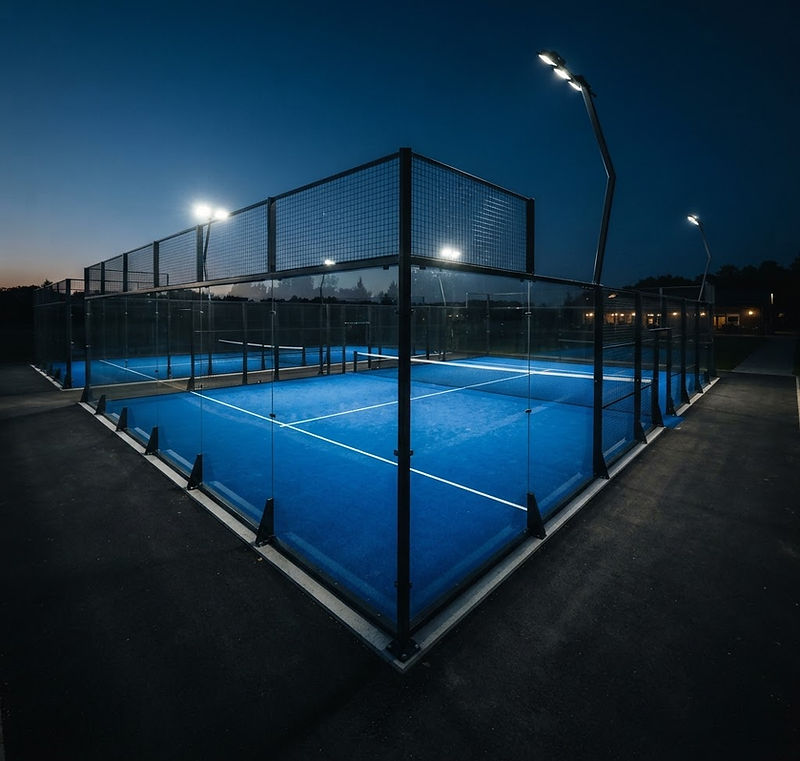
Padel: the rally never ends.
Tennis with walls, half the court, twice the rallies. Everything a newcomer needs to know before the first booking — in eight quick points, no sign-up required.
- Court
- 20 × 10 m
- Serve
- Underarm
- Format
- 2 v 2
- To a set
- 6 games
The eight basics,
in the order they matter.
01 → 08
Scroll to rally
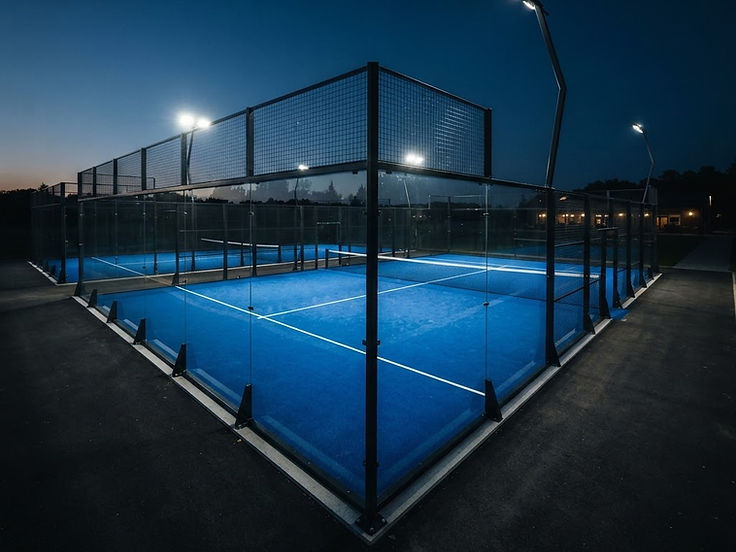
Padel is tennis with walls — on a much smaller court
Padel is a racquet sport invented in Mexico in 1969 and raised in Spain and Argentina, where it now fills more courts than tennis does. You play it in an enclosed court roughly a third the size of a tennis court, with solid rackets instead of strung ones.
The big idea is that the walls are part of the game. Balls rebound off glass and you keep playing, so points last longer and rallies feel like a conversation rather than a sprint. Easy to pick up, hard to master, almost always fun.


Twenty by ten metres, wrapped in glass
Every court is 20 metres long and 10 metres wide, split by a net that dips to 88 cm in the middle. The back and side walls are tempered glass, usually 10 or 12 mm thick, with a metal mesh fence along the rear section.
Those walls aren't an obstacle — they're a teammate. They keep the ball alive, reward clever angles, and mean you spend far more time playing and far less time chasing balls into the next postcode.


A solid racket, a ball that behaves
A padel racket is solid: no strings, no sweet spot to hunt for. It's a foam core wrapped in carbon fibre or fibreglass, drilled with holes for aerodynamics and capped at 38 mm thick. The wrist strap is mandatory, and plenty of players add a safety tether.
Padel balls look like tennis balls but sit at a slightly lower pressure, which keeps them from flying off the glass. Clubs almost always rent rackets and sell balls at the desk, so you can arrive with trainers and nothing else.


The serve is underarm — and deliberately gentle
You drop the ball, let it bounce once behind the service line, and strike it below waist height. No overheads, no aces off the fence. It has to travel diagonally into the opposite service box, and you get two attempts.
The receiver can't volley the serve; the ball must land in the box first. Think of it as the opening move of a rally rather than a weapon — in padel, the point starts when the ball comes back.
Court note
The wall isn't in your way.
It's on your team.
Half the rules of padel only make sense once you understand this one.

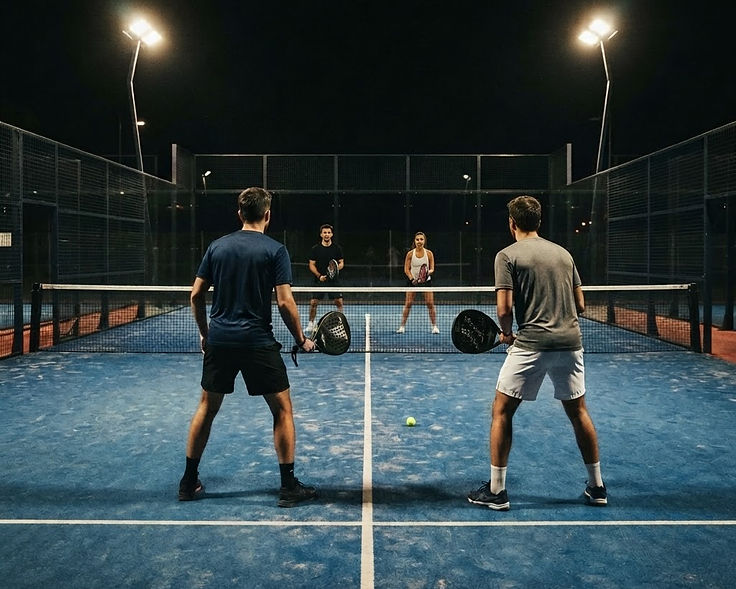
Fifteen, thirty, forty — then the golden point
Scoring comes straight from tennis: 15, 30, 40, game. Win six games to take a set, and most matches are best of three. At 6-6 a tie-break settles the set.
One padel quirk: many club and social games use the golden point, where 40-40 is decided by a single rally. It keeps evenings moving, and it means you never have to remember what advantage means at 11pm.


Let it hit the wall, then play it
After the ball bounces on your side, it stays live even if it strikes the glass or the mesh behind you. Let it come off the wall, step back, and return it. You can also aim your own shots into the opponents' walls — provided the ball bounces on their floor first.
What's out: hitting the ball straight into a wall on the full, or letting it bounce twice. The first bounce is the one that must land inside the lines.

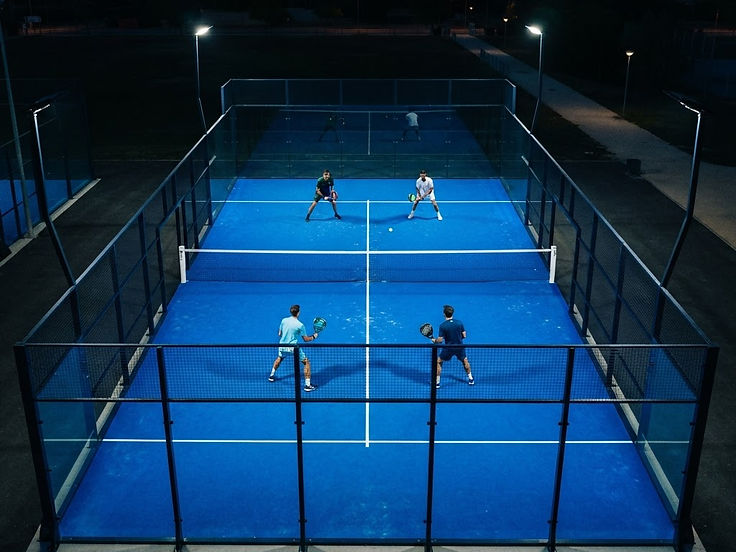
It's always doubles — two against two
Padel is played two against two, always. There's no singles format in the standard game: the court is small enough that two players cover it comfortably, and the walls make it impossible to simply blast your way through.
So positioning beats power. You and your partner move roughly side by side, take the net together, and call every ball that lands between you. Chat, plan, apologise for the ones you nick — it's a social sport by design.


Book a court, bring three friends
Most clubs rent rackets and sell balls at the desk, so one booking covers everything. Wear trainers with decent grip — court shoes work better than running shoes, but either beats turning up in sandals.
Go with three friends, or join an intro session where a coach pairs you up. An hour is enough to play real points, and most people are hooked before the end of the first set.
The game point
Eight points.
One hour.
A lifetime of rallies.
You don't need to be good at tennis to enjoy padel — just curious enough to book once. Rackets are rented at the desk, balls cost a few euros, and the court is small enough that you'll be playing real points within ten minutes.
Find your nearest courtOpens a map search — no account, no card
Back to the top